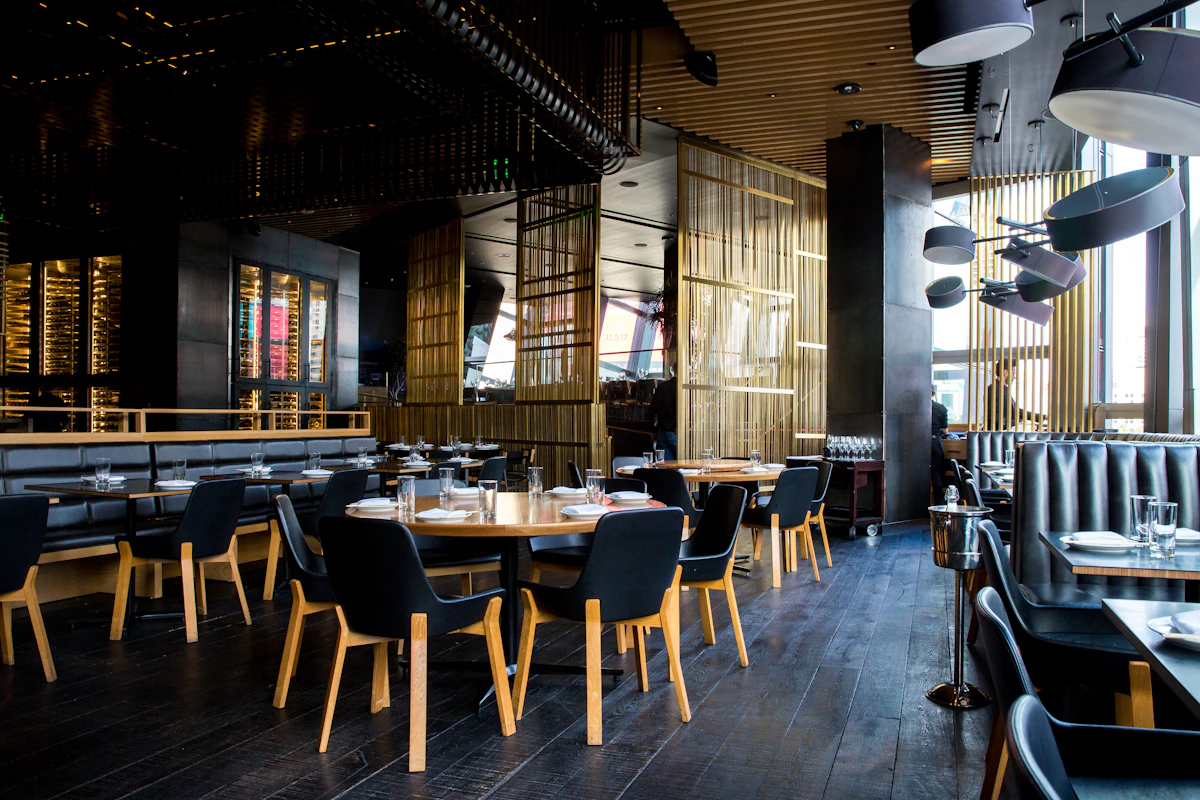
Restaurant interiors are often judged by mood: the lighting, the wall color, the table setting, and the first impression from the entrance. Yet the furniture quietly determines whether that mood can survive a busy service. Chairs are dragged, tables are wiped dozens of times, booths are used by families, and bar stools take constant side pressure. Good restaurant furniture must support atmosphere, turnover, and maintenance at the same time.
The first design decision is seating mix. A room filled only with loose tables may be flexible, but it can feel temporary. A room filled only with fixed booths may feel intimate, but it can limit group sizes. Many successful restaurants combine banquettes along walls, movable two-top tables in the center, and a few larger communal or round tables for groups. This mix gives the operator options while creating visual rhythm for guests.
Chair comfort should be matched to the dining concept. A fine dining restaurant may want deeper seats and more upholstered surfaces because guests stay longer. A fast casual space may prefer lighter chairs that are easy to move and clean. Seat height, back angle, and weight are practical details. If a chair is too heavy, staff will dislike resetting the room. If it is too light, it may feel cheap or unstable. The right chair feels intentional for the price point and service style.
Tables need equal attention. A beautiful top that stains quickly will frustrate both staff and owners. Solid wood can be warm and repairable, but it needs the right finish. Laminate and compact surfaces can be extremely practical when selected well. Stone adds character but increases weight and may require sealing. Edge profile matters because guests touch it constantly, and sharp edges can make a table feel less comfortable than it looks.
For custom booth seating, dimensions should be tested before production. Back height affects privacy, seat depth affects posture, and kick space affects cleaning. Upholstery seams should not be placed where crumbs and spills collect easily. A capable restaurant furniture manufacturer can help translate a designer’s mood board into seating that works through lunch rush, dinner service, and daily cleaning routines.
Material selection should respond to the menu and the neighborhood. A wine bar, noodle shop, seafood restaurant, and hotel breakfast room have different cleaning risks. Dark fabrics hide some marks but can show lint. Light leatherette looks fresh but may reveal dye transfer. Timber chairs add warmth but should be protected at the feet and stretchers. Metal frames can be durable, though they need good glides to reduce noise on hard floors.
Maintenance planning should happen before opening. Keep a record of finishes, fabrics, hardware, and spare parts. Order extra glides, screws, and a small quantity of matching upholstery if possible. Train staff on which cleaning products are safe for each surface. Many furniture failures begin with good intentions and the wrong chemical. A durable finish can still be damaged by abrasive pads or high-strength cleaners.
Atmosphere is not separate from operations. Guests notice when a chair wobbles, when a table rocks, or when a booth cushion has collapsed. They may not describe it as a furniture issue, but it affects their impression of quality. The best restaurant interiors choose furniture that photographs well, functions smoothly, and can be maintained without drama. In a competitive dining market, that combination is a design advantage.
Acoustics are another furniture-related detail that can change the guest experience. Upholstered booths, fabric backs, and padded seats absorb more sound than hard chairs and bare walls. In a lively restaurant this can be useful because energy remains high without making conversation difficult. Designers should coordinate furniture with ceiling, wall, and floor finishes rather than treating each item separately. A beautiful chair may still be the wrong choice if the room already has too many hard reflective surfaces.
The installation plan should be part of the furniture conversation as well. Measure doorways, stair turns, elevator capacity, and the final route from unloading area to dining room. Large booth sections may need to be split for delivery and joined on site. Table bases should be matched to floor levels so staff do not have to improvise with folded paper under a foot. These practical steps are not glamorous, but they help the restaurant open smoothly and keep the design looking professional after the first busy weekend.
Budget conversations should include lifecycle cost, not only opening cost. A cheaper chair may be reasonable for a short pop-up concept, but a full-service restaurant planning years of operation should consider repair, cleaning, and replacement frequency. If a table top can be refinished or a booth cushion can be replaced without rebuilding the entire unit, the initial investment may pay back through reduced downtime. Restaurant furniture is part of the business model because it affects guest comfort, staff efficiency, and the room condition that customers see every day.